
Does laser cleaning damage the underlying material?
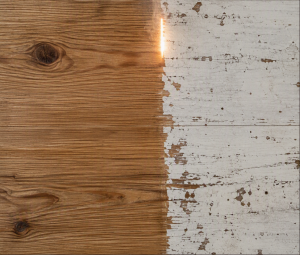
One of the major advantages of laser cleaning is that the process can be carried out in a highly targeted and controlled manner. With the right settings, contaminants such as rust, paint, varnish or oxidation can be removed while preserving the underlying material as much as possible.
However, this does not mean that a laser can never cause damage. As with any powerful industrial technology, the correct settings, the material and the operator’s experience are important for achieving a good result.
How can a laser remove contamination without damaging the material?
During laser cleaning, laser energy is directed at the surface. The contamination reacts differently to this energy than the underlying material. By correctly adjusting the settings, the unwanted layer can be removed without unnecessarily affecting the base material.
This makes laser cleaning particularly suitable for applications where precision is important. Examples include removing rust from metal components, paint from a specific area, or contamination from tools and machine parts.
Unlike sandblasting, for example, no abrasive blasting media is propelled against the surface at high pressure. This means there is no mechanical impact from sand or grit.
The right settings make the difference
Not every material reacts to laser energy in the same way. That is why there is no universal setting that can be used for every application.
When setting up a laser cleaning machine, several factors are taken into account, including:
- the type of base material;
- the type of contamination or coating;
- the thickness of the layer to be removed;
- the desired end result;
- the number of passes over the same area.
The aim is not simply to clean with as much power as possible. The objective is to use enough energy to remove the contamination without unnecessarily affecting the underlying material.
What happens if the laser is set incorrectly?
If the settings are too aggressive or the laser is applied to the same area for too long, the surface can indeed be affected. Depending on the material and application, this can result in discoloration or changes to the surface.
That is why it is important to determine the appropriate settings in advance.
For delicate components or new applications, testing the material first is the safest approach. This makes it possible to assess how both the contamination and the base material react before treating the entire component.
Also suitable for precise cleaning
The ability to work very locally is one of the key advantages of laser cleaning compared with many traditional cleaning methods.
For example, if paint only needs to be removed from a specific area of a metal component, the laser can be directed precisely at that area without necessarily treating the entire component.
This is particularly useful for:
- preparing surfaces for welding;
- locally removing paint or coatings;
- cleaning machine components;
- removing rust and oxidation;
- cleaning moulds and tools.
Laser cleaning can therefore be used not only as a general cleaning method, but also as a targeted step within a production process.
Does laser cleaning never damage the material?
The most accurate answer is: with the correct application and settings, the objective is to remove the contamination with minimal impact on the underlying material.
We deliberately do not claim that damage is impossible. Incorrect settings, improper use or a material that is not suitable for the selected parameters can result in unwanted effects.
That is why the combination of material, contamination and desired result must always be taken into account.
Test first, then clean
At Robustix, we assess each application individually to determine the most suitable approach. Especially when a material or type of contamination has not been tested before, a cleaning test can help determine the correct settings.
Laser cleaning is therefore not simply about using as much power as possible. It is about control: using enough energy to remove the contamination while minimizing the impact on the material underneath.
This makes laser cleaning particularly suitable for applications where precision, control and preservation of the original surface are important.